Alan Llavore | Office of Marketing and Communications | (909) 537-5007 | allavore@csusb.edu
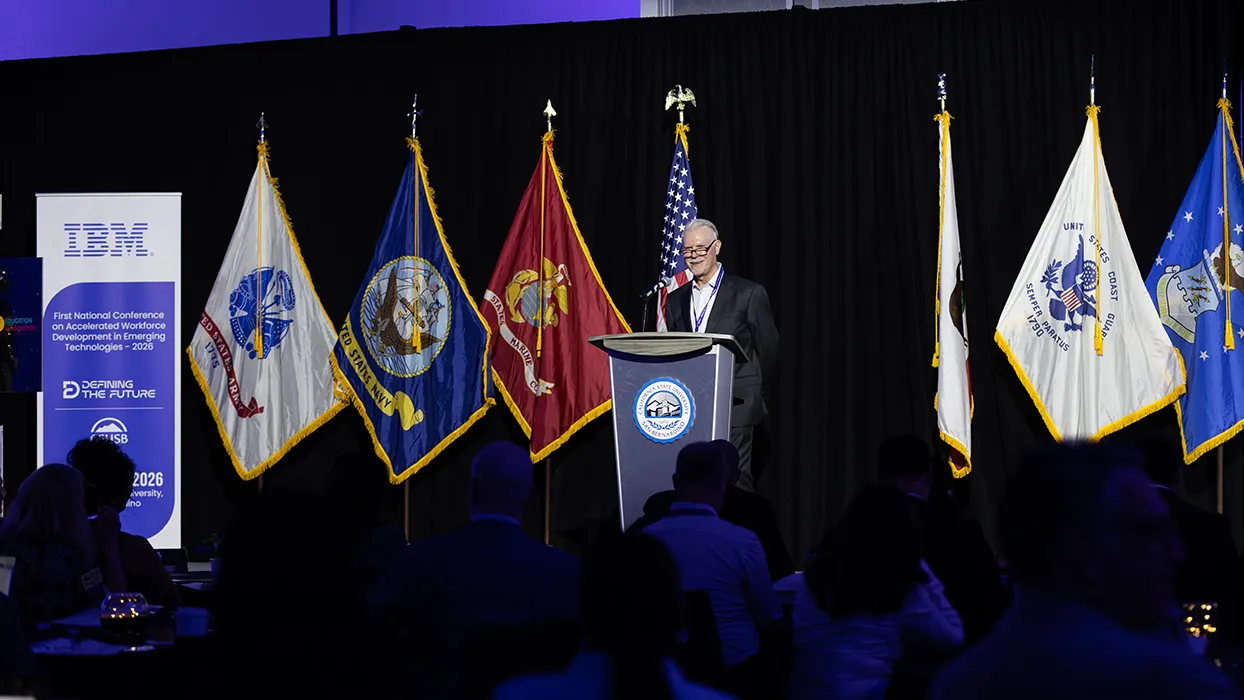
At Cal State San Bernardino, the future didn’t seem distant — it felt immediate.
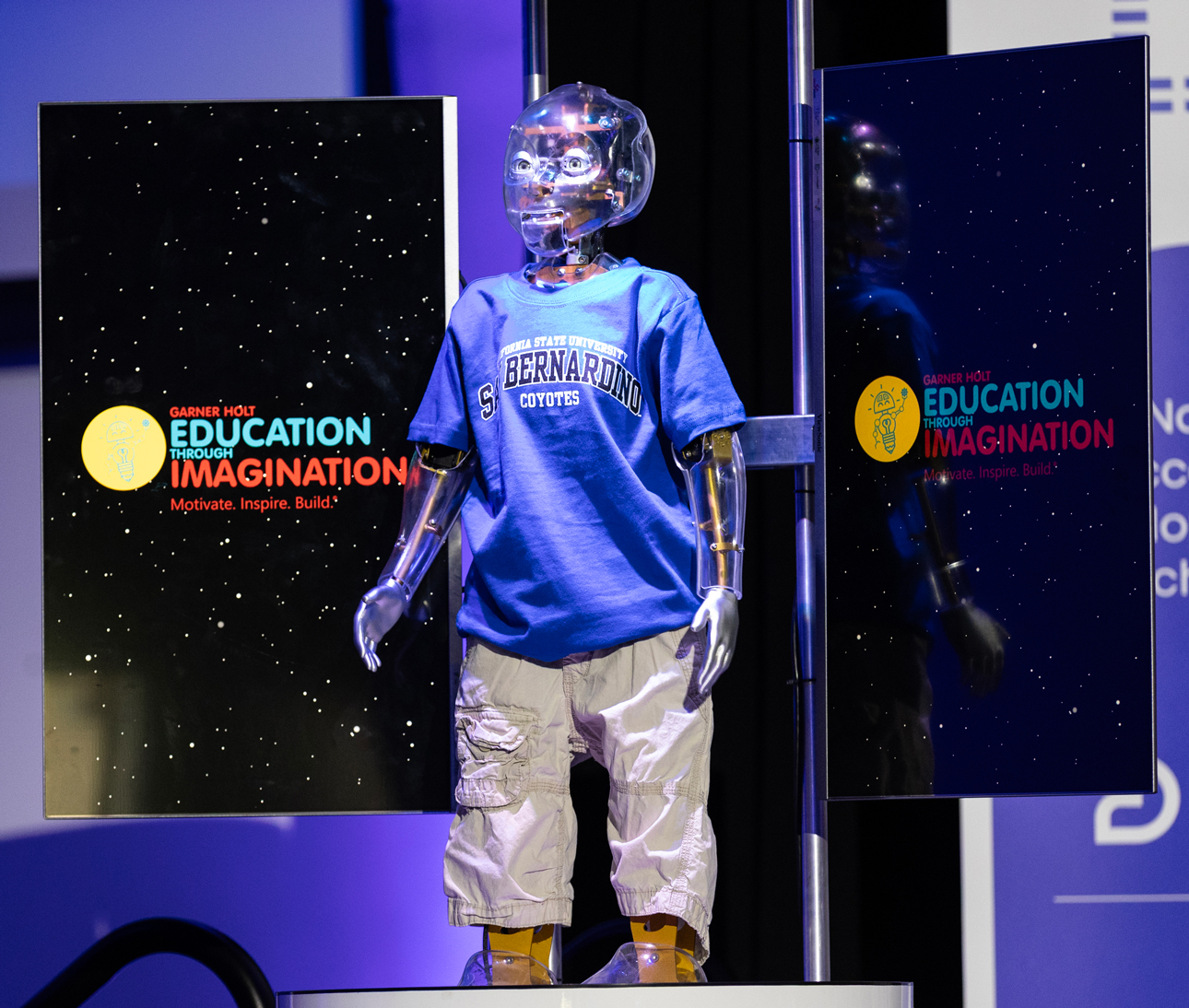
And it opened with an unexpected voice.
Sparky the robot greeted attendees the morning of April 15 at the Defining the Future Conference with a challenge: technology is moving fast, and workforce development must move faster. The gap between the two, he said, is where opportunity is lost. The purpose of the conference was clear from the start — not theory, but action.
Not buzzwords, but blueprints.
Not someday, but now.
“Carry one question into every session and conversation,” he urged. “How do we turn this into skills? Credentials? Apprenticeships? Jobs? And measurable impact.”
That sense of urgency carried through the inaugural conference, positioning Cal State San Bernardino at the center of conversations shaping workforce development, higher education and emerging technologies.
Held April 15-16 alongside the university’s annual Meeting of the Minds student research symposium, the conference brought together leaders from industry, government and higher education to examine how advancements in artificial intelligence, quantum computing, cybersecurity and advanced manufacturing are reshaping the world of work.
The scale of the event reflected that significance. According to conference co-organizer Ryan W. Keating, professor and director of CSUSB’s Office of Student Research and Innovation, the conference exceeded expectations, drawing an estimated 700 attendees each day to Santos Manuel Student Union North and South. Nearly 100 speakers and exhibitors participated, along with more than 25 companies, universities and agencies. With sponsorships from IBM and Entrokey Labs, the event created a space where ideas, innovation and opportunity came together.
“We are living in a moment of profound transformation. Advances in artificial intelligence, digital infrastructure and advanced manufacturing are not only changing how we work, they are redefining what it means to be ready for the future,” said CSUSB President Tomás D. Morales. “Workforce development is no longer a parallel priority – it is central to our mission. By strengthening pathways between education and industry, investing in skills that matter and fostering inclusive access to opportunity, we can build a future that is both competitive and equitable.”
Rafik Mohamed, provost and vice president of Academic Affairs, emphasized the role of higher education in that shift.
“We are navigating a period where emerging technologies are reshaping expectations across every sector. In response, higher education must continue to evolve – ensuring that learning experiences are connected, applied and responsive to the complexities of today’s world,” he said. “Spaces like this gathering are critical. They bring people together across disciplines and roles, creating opportunities to exchanges perspectives, form meaningful partnerships, and develop collaborative approaches to shared challenges.”
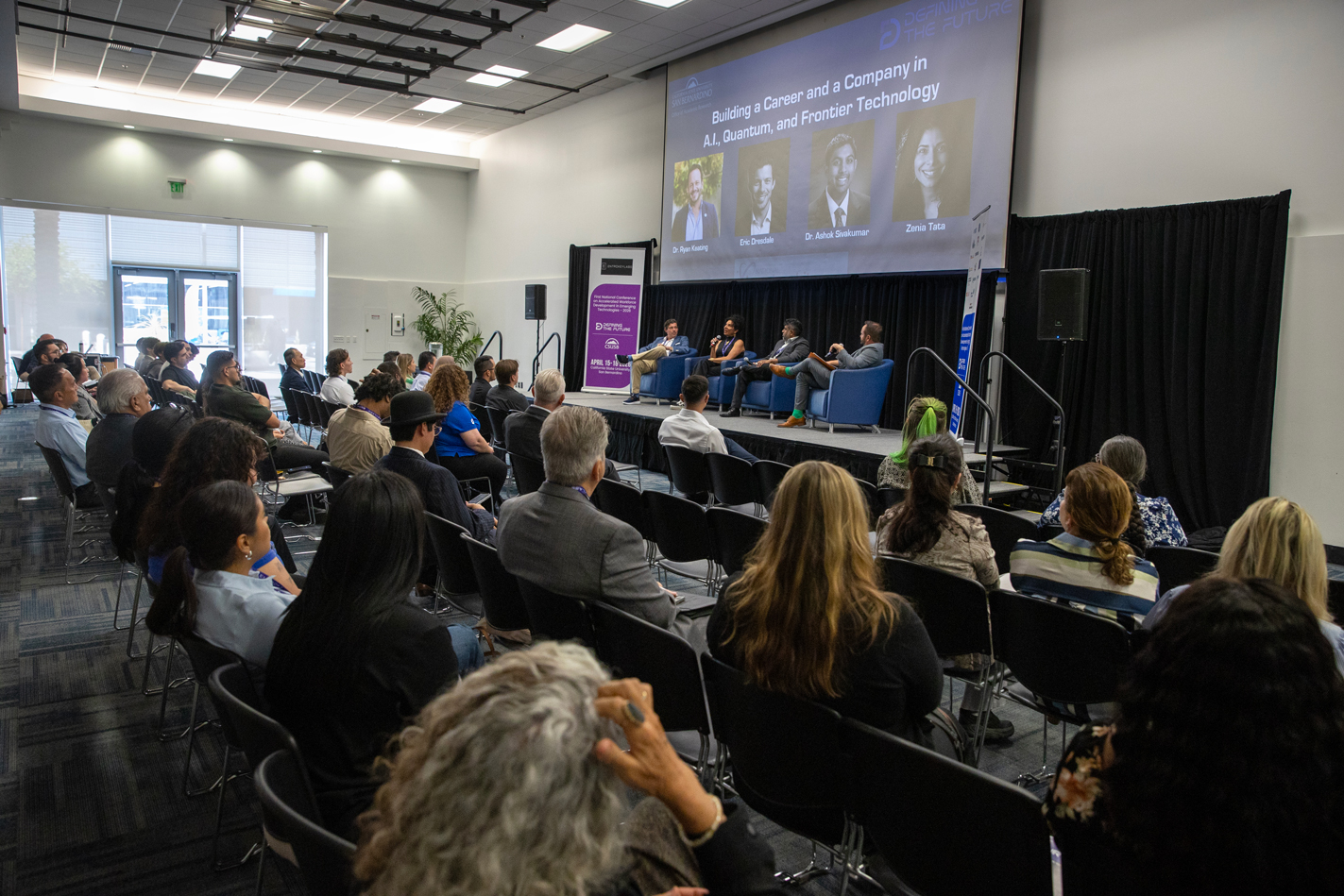
Powerful keynote addresses throughout the two-day event reinforced the conference’s focus on innovation, workforce readiness and emerging technology. Speakers included David Harding, CEO of Entrokey Labs, who addressed the growing importance of artificial intelligence and quantum technologies, and Valerie Capers Workman, Esq., chief human resources officer for Empower Pharmacy and former head of HR for Tesla, whose keynote focused on talent, leadership and the enduring value of higher education in a rapidly evolving, AI-driven workforce.
Across two days of sessions, panels and discussions, conversations moved beyond emerging technologies themselves to their broader impact – how industries are changing, how workforce needs are shifting, and how universities must prepare students for what comes next.
Day one focused on the pace of change, highlighting how technologies already shaping industries are redefining career paths. By the second day, the focus shifted to what comes next — how ideas turn into real results. Conversations explored partnerships, emerging technologies and the systems needed to bring innovation to scale. A key theme emerged: preparing students for the future requires strong connections between education, industry and the region.
That connection was reflected not only in the ideas shared, but in the people leading the conversations. Alumni returned to campus as part of the conference, contributing their professional experience to discussions shaping their industries. During the Day Two session, “The Commercialization Playbook — Capital, Partnerships & Growth,” CSUSB alumnus Robert Grey joined fellow panelists, including MSEI alumna Miranda Lee, to share insights on how ideas move from concept to market. They were among several alumni who participated throughout the conference, supporting their alma mater while offering real-world perspective drawn from their own professional journeys.
At the center of it all were students.
Through Meeting of the Minds, students presented research alongside professionals working in these fields, creating a rare environment where academic work and industry practice met. For many, it offered a direct look at the careers they are preparing to enter.
The conference built on an already strong culture of research at CSUSB, where more than 3,000 students each year gain hands-on experience through the Office of Student Research. By connecting those experiences with employers and industry leaders, the event helped students see how their skills translate into real opportunities.
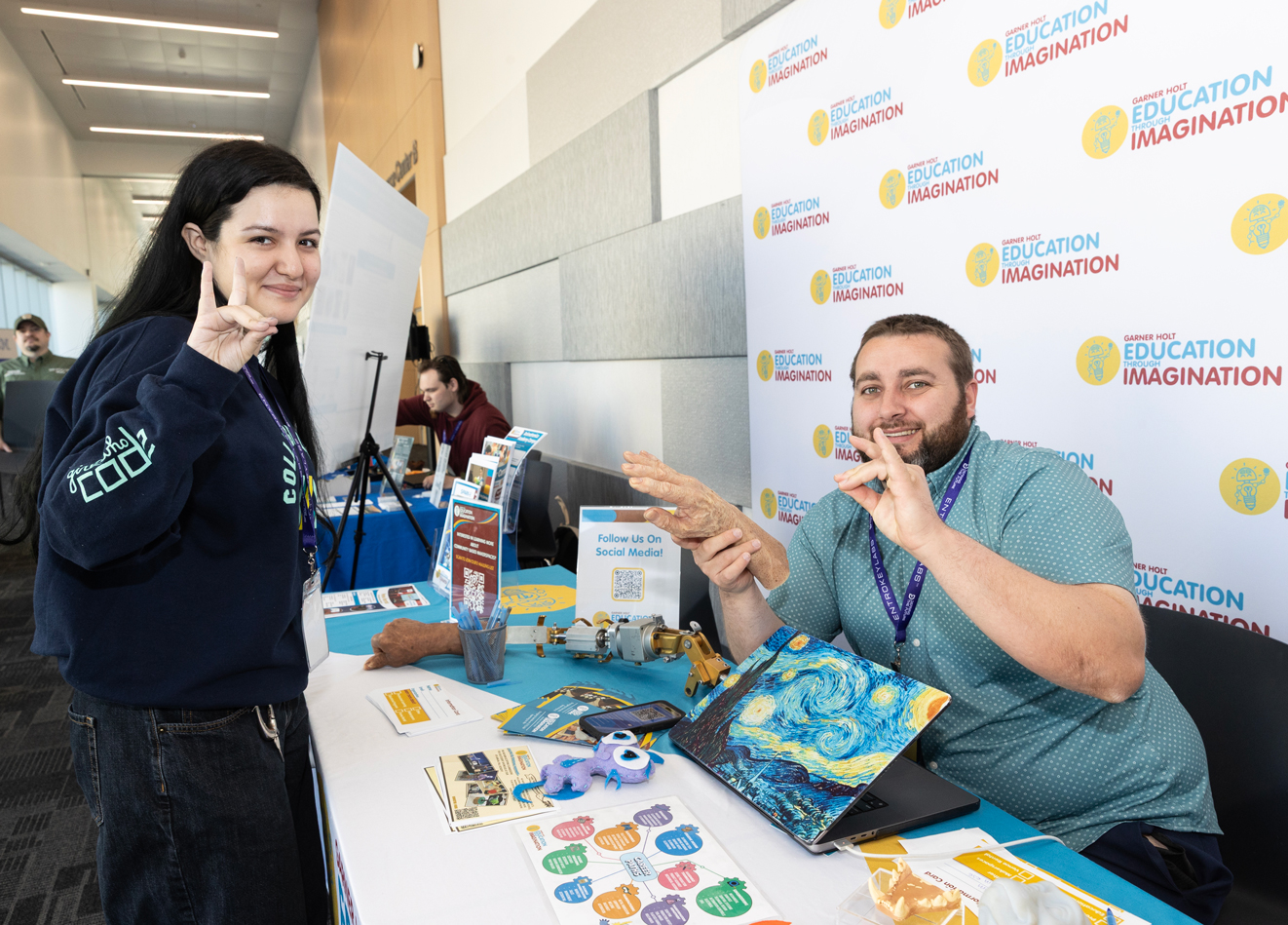
For Keating, that connection is the goal.
“We’re at the precipice of a rapidly changing world, where technology is advancing faster than most can make sense of and terms like AI, quantum and machine learning are headlining the news, dictating policy and fundamentally altering our lives, our work and our research. Technology is not something to be scared of,” he said during his remarks at the morning session on April 15. “It’s a tool, and like any tool, it’s powerful in the hands of those who know how to use it.
“And the job of our university and our partners is to ensure that students and the next generation of students who move through our university institution know how to best wield the tools and excel,” he said.
Beyond the sessions and presentations, the conference also signaled something larger about the university’s direction. By bringing together leaders across sectors and creating space for collaboration, CSUSB is positioning itself at the forefront of emerging technologies and workforce development.
As conversations moved from mainstage keynotes to breakout rooms and into networking spaces, one idea remained constant – the future isn’t something to wait for. It’s something being actively shaped, and CSUSB is helping lead that work.